
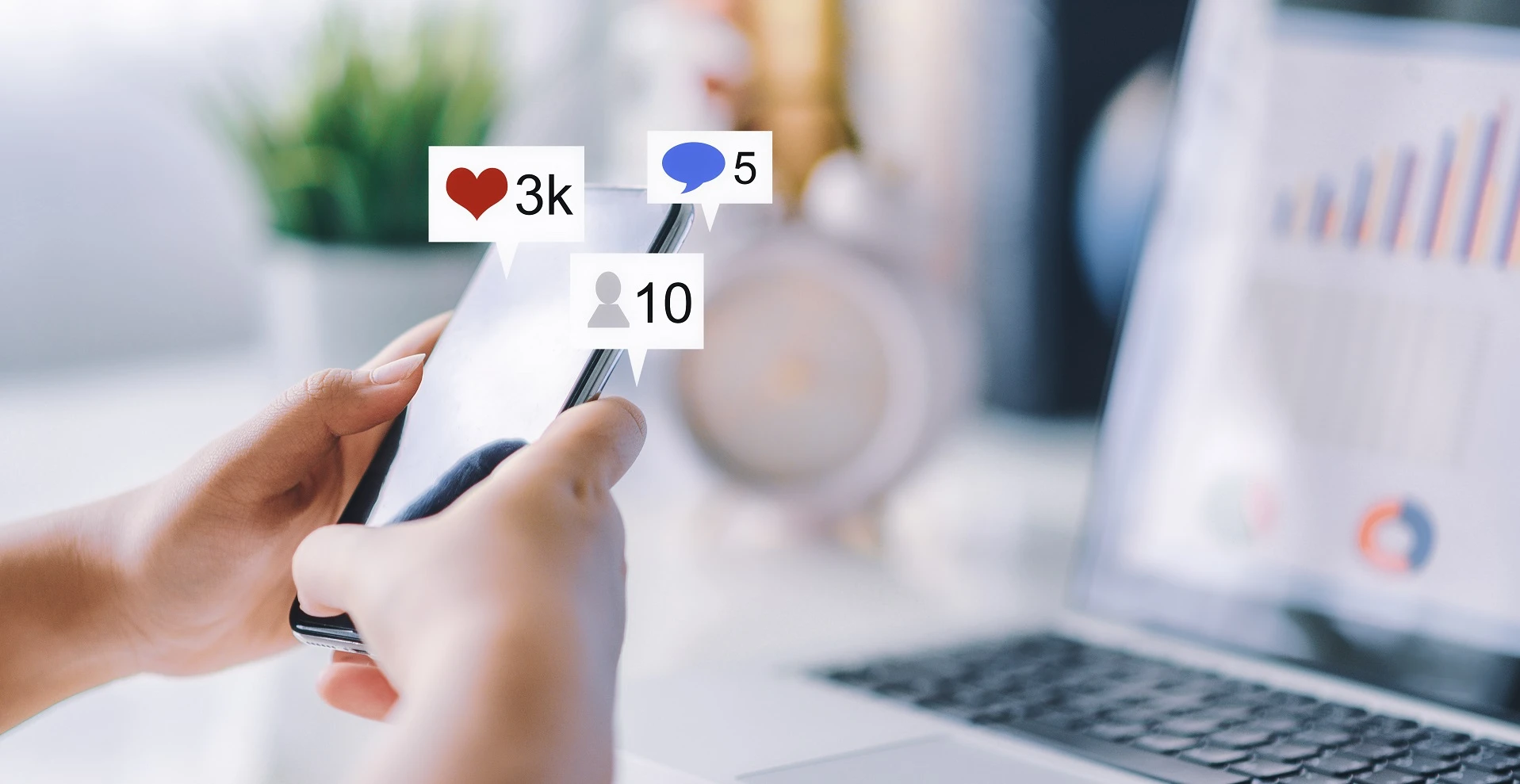
Most businesses feel good about their social media performance. High reach, growing followers, strong engagement… everything looks positive on reports. But when you look at actual results, there’s a disconnect. Leads are inconsistent, conversion is weak, and the impact on revenue is unclear. The problem is not in the effort, it’s in what you’re measuring. Not all KPIs are equal, and focusing on the wrong metrics creates an inaccurate representation of commercial ROI. If your goal is lead generation, you need to track what actually drives action, not what just looks impressive.
The Commercial Flaw of Surface-Level Metrics
Vanity metrics are easy to track… and easy to misinterpret.
Examples include:
- Likes
- Followers
- Views
- Reach
They give visibility,
but not necessarily results.
What KPIs Actually Matter for Lead Generation
If your goal is leads, your KPIs should reflect the journey from attention to action.
Cost Per Lead (CPL)
This is one of the most important metrics.
- How much are you paying for each lead?
- Is it sustainable?
CPL helps you understand efficiency.
Conversion Rate
This measures how many people take action after interacting with your content.
- Click → Lead
- View → Click
A low conversion rate means something is broken in the funnel.
Click-Through Rate (CTR)
CTR shows how effective your message is.
- Are people interested enough to click?
Low CTR = weak messaging or creatives.
Lead Quality
Not all leads are equal.
You need to track:
- Qualified vs unqualified leads
- Conversion into actual customers
This is where many businesses fail.
Cost Per Qualified Lead
This is more important than CPL.
Because:
- Cheap leads that don’t convert = wasted budget
Focus on quality, not just quantity.
How KPIs Map to Your Acquisition Pipeline
Each KPI reflects a stage:
- Reach → Awareness
- CTR → Interest
- Conversion rate → Action
- Lead quality → Business impact
Tracking them together gives a complete picture.
Why Most Businesses Track the Wrong KPIs
Because:
- Vanity metrics are easier
- They look good in reports
- They don’t require deep analysis
But they don’t drive decisions.
How to Shift to Performance-Based KPIs
Step 1: Define Your Objective
Is it:
- Leads?
- Sales?
- Awareness?
Your KPIs must match your goal.
Step 2: Track the Full Funnel
Don’t stop at clicks or engagement.
Track:
- Leads
- Qualified leads
- Conversions
Step 3: Align Marketing with Sales
Data should not stop at marketing.
You need:
- Feedback from sales
- CRM tracking
- Real outcome measurement
What KPIs should I track for social media lead generation?
For social media lead generation, you should focus on KPIs like cost per lead, conversion rate, click-through rate, and lead quality. These metrics reflect actual performance and help you understand how effectively your campaigns generate business results.

Why are likes and followers not enough?
Likes and followers are visibility metrics, not performance metrics. They show engagement but do not directly translate into leads or revenue. Businesses that focus only on these metrics often miss the real impact of their campaigns.
How do I measure lead quality from social media?
Lead quality can be measured by tracking how many leads convert into actual customers. This requires integrating your marketing data with CRM systems and analyzing the full customer journey beyond the initial lead.
Final Thoughts
Social media success is not about how many people see your content, it’s about how many take action because of it. When you shift your focus from vanity metrics to performance-driven KPIs, your entire strategy changes. Decisions become clearer, campaigns become more effective, and results become measurable. And that’s when social media stops being just a presence and starts becoming a real growth channel.